The Golden Age That Never Was
Let me paint you a picture. It’s 2005, and you’ve just discovered OCRemix for the first time. Your dial-up connection is struggling to load a single MP3, but you’re willing to wait forty-seven minutes for that orchestral arrangement of Green Hill Zone because something about it feels huge. The community felt electric back then, like we were all part of some underground movement that truly understood what made video game music special.
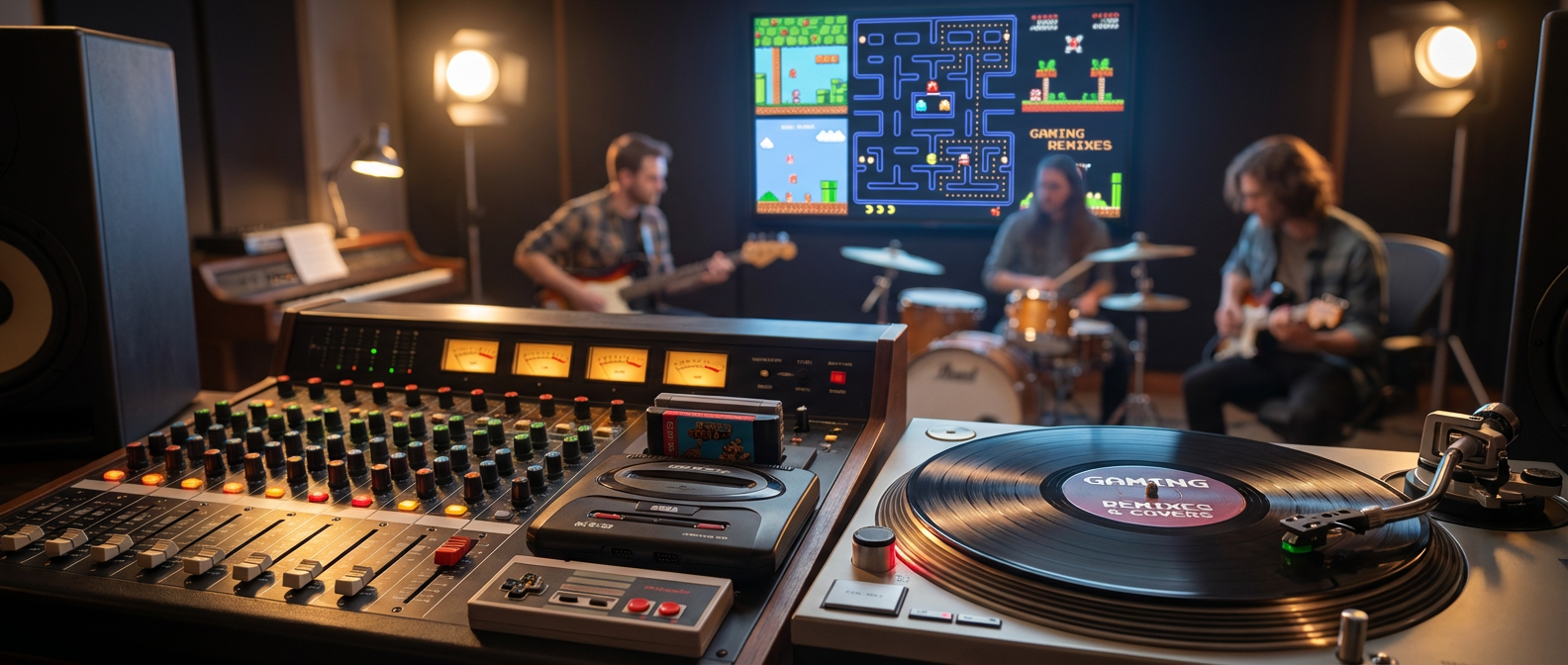
Here’s the thing though: when I go back and listen to those early remixes now, about half of them are pretty rough around the edges. The passion was always there, but the production quality often wasn’t. We were so hungry for any kind of recognition that game music deserved serious treatment that we’d champion arrangements that were more enthusiasm than execution. That’s not a criticism, it’s just how scenes develop.
The real magic wasn’t in the individual tracks themselves, but in what they meant. For the first time, there were people taking the bleeps and bloops of our childhood seriously enough to reimagine them with real instruments, electronic manipulation, and actual compositional thought. Sites like VGMusic and Remix.ThaSauce became gathering places for musicians who understood that Nobuo Uematsu and Koji Kondo weren’t just making background noise. They were writing real compositions that happened to be limited by hardware constraints.

The Bedroom Producer Revolution
Fast forward to the mid-2010s, and suddenly everyone had access to production tools that would have cost thousands of dollars just a decade earlier. FL Studio, Logic, even GarageBand became entry points for bedroom producers who grew up with controllers in their hands. This democratization led to an explosion of gaming music content that was both the best and worst thing to happen to the scene.
YouTube channels like GaMetal and FamilyJules started pumping out metal covers with production values that rivaled professional releases. Meanwhile, artists like Disasterpeace and Chipzel were creating original chiptune compositions that felt both nostalgic and completely contemporary. The quality ceiling got raised dramatically, but so did the noise floor.
I remember being blown away by some of the orchestral arrangements coming out of places like Video Games Live, only to realize later that many of them leaned heavily into bombast without really understanding the subtlety of the source material. Don’t get me wrong, there’s absolutely a place for turning the Halo theme into a full symphonic experience. But something gets lost when every arrangement defaults to “bigger is better.”
The real gems from this era were the remixers who understood restraint. Artists like bLiNd could take something like Secret of Mana’s soundtrack and create electronic arrangements that felt both faithful and completely transformative. Or Stemage, whose Metroid Metal project proved that you could honor the source material while making something entirely your own.
The Streaming Era Reality Check
Then Spotify happened, and everything changed again. Suddenly, video game music remixes were competing for attention in the same space as every other piece of music ever recorded. The algorithmic playlist culture meant that your lovingly crafted arrangement of Chrono Trigger’s “Wind Scene” was now being judged by the same metrics as Top 40 hits.
This shift revealed something uncomfortable about the remix scene: a lot of what we’d been celebrating was more about the emotional connection to the source material than the actual musical merit. When you strip away the nostalgia factor, some arrangements just don’t hold up against contemporary music standards. That’s a hard pill to swallow for those of us who spent years insisting that game music remixes deserved more respect.
But here’s where it gets interesting. The artists who survived this transition were the ones who’d been thinking beyond simple nostalgia bait all along. GameChops started curating releases that could stand on their own musical merits while still honoring their pixelated origins. Artists like Lena Raine began creating music for games that sounded like it belonged in the modern remix scene, blurring the lines between original composition and reimagining.
The New Guard and What They’re Getting Right
Today’s gaming music remix scene is more sophisticated than it’s ever been, even if it’s also more fragmented. Artists like RichaadEB have figured out how to make metal arrangements that feel both technically proficient and emotionally resonant. The key difference is that they’re not just translating 8-bit melodies into different instruments. They’re understanding the harmonic and rhythmic possibilities that were implied in the original constraints.
The jazz fusion approach that artists like insaneintherainmusic bring to Nintendo soundtracks reveals layers in the compositions that many of us never noticed. When you hear a bebop interpretation of Splatoon’s soundtrack, you realize that the original composers were working with more sophisticated musical concepts than the hardware could fully express. These aren’t just covers. They’re archaeological excavations of musical intent.
What’s really exciting is how the scene has started to embrace lo-fi and ambient reinterpretations. Projects like Materia Collective have shown that you can honor the meditative qualities of games like Journey or Ori without resorting to epic orchestration. Sometimes the most effective way to capture the feeling of wandering through Hyrule Field is with a gentle acoustic guitar and some subtle ambient texturing.
Beyond Nostalgia: What Actually Lasts
Looking back with clear eyes, the gaming music remixes that still hit after all these years share a few common traits. They understand the emotional core of the source material without being slavishly devoted to recreating every note. They bring genuine musical personality to the arrangement rather than just technical proficiency. And most importantly, they work as standalone pieces of music, not just as tributes to our gaming memories.
The arrangements that felt revolutionary in 2005 but sound dated now were often the ones that mistook complexity for sophistication or volume for impact. The lasting classics are the remixes that found something in the original composition that even the original composer might not have fully realized was there.
This doesn’t mean we should abandon the enthusiastic bedroom producer spirit that built this scene. Some of my favorite discoveries are still rough-around-the-edges passion projects from musicians who just really, really love Mega Man X. But it does mean we can be honest about what we’re celebrating and why.
The gaming music remix scene taught me that nostalgia is powerful creative fuel, but it’s not a substitute for musical substance. The best remixes use our emotional connection to these soundtracks as a starting point, not a destination. What are some gaming music remixes that you think have stood the test of time, and what do you think separates the lasting gems from the nostalgic novelties?