The Controller That Bridges Generations
There’s something magical about holding a piece of hardware that feels like it was designed by someone who actually plays games. The 8BitDo SN30 Pro+ isn’t just another third-party controller trying to undercut the competition on price. It’s a love letter to gaming history wrapped in modern engineering, and honestly, it might be the most thoughtful controller design I’ve encountered in years.
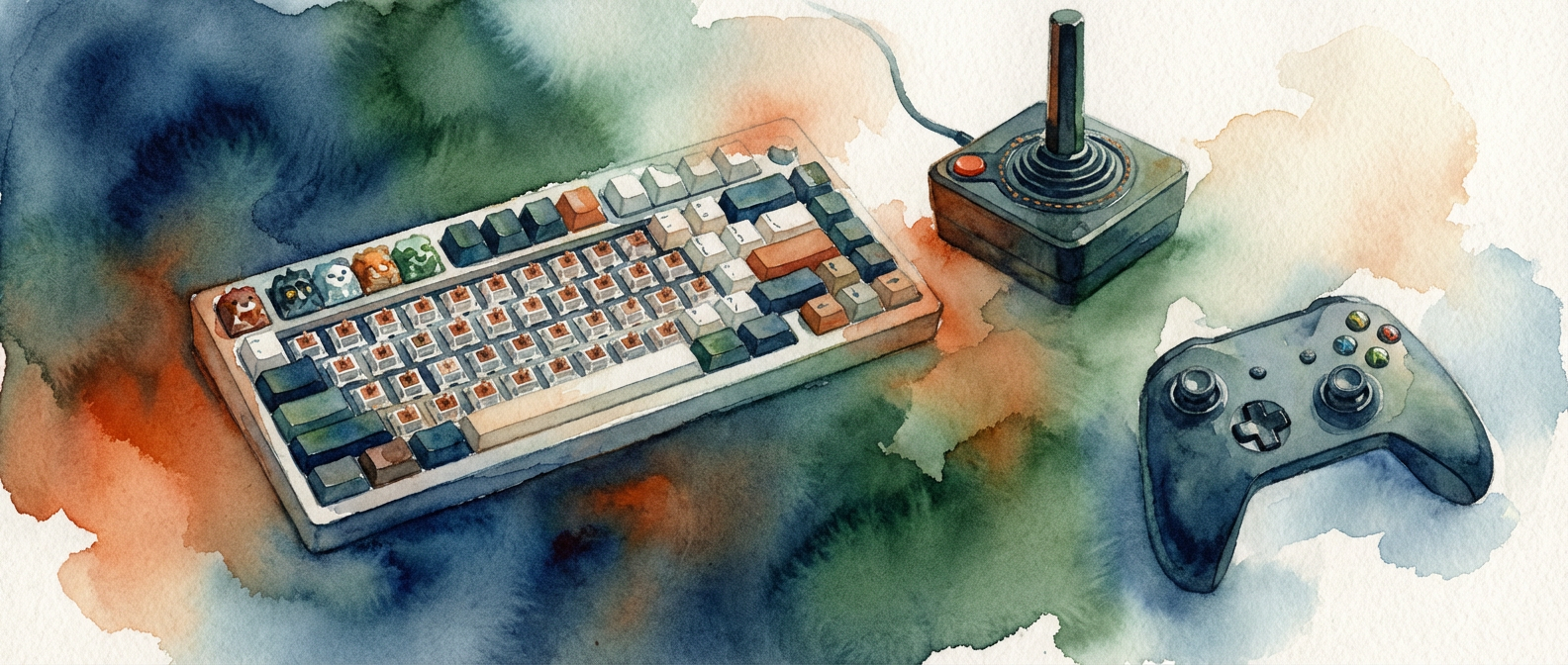
When you first pick up the SN30 Pro+, the weight distribution tells you everything. At 246 grams, it sits perfectly between the featherweight feel of older controllers and the dense heft of modern gamepads. The designers at 8BitDo understood that tactile feedback starts before you even press a button. The matte finish on the face contrasts beautifully with the glossy accents, creating visual hierarchy that guides your fingers naturally to the controls. This isn’t accidental design. This is deliberate craft.
But here’s where it gets interesting from a design criticism standpoint. Most controller manufacturers focus on ergonomics first, aesthetics second. 8BitDo flipped that approach and somehow made both work better. The SNES-inspired button layout creates an immediate emotional connection for anyone who grew up with Nintendo, while the added analog sticks and modern connectivity options prove that nostalgia without function is just decoration.

The Mechanical Symphony Under Your Thumbs
Let’s talk about something most reviews gloss over: the actual mechanical engineering inside this thing. The face buttons use what 8BitDo calls their “precision floating D-pad technology,” which is marketing speak for something genuinely innovative. Each directional input has a distinct tactile click with about 1.2mm of travel distance. Compare that to the mushy, uncertain feedback of most modern D-pads, and you start to understand why speedrunners and fighting game enthusiasts choose this controller.
The shoulder buttons fix a problem most people don’t realize exists. Traditional controllers often have trigger dead zones where slight pressure doesn’t register, creating inconsistency in games that require precise analog input. The SN30 Pro+ uses a progressive resistance curve that starts registering input at just 0.3mm of depression. Playing something like Forza or Gran Turismo with these triggers feels like having direct control over your vehicle’s acceleration.
What really impresses me is the button cap construction. Instead of using standard injection-molded plastic, 8BitDo employs a dual-shot molding process that makes the legends (letters and symbols) part of the button structure rather than painted on top. This means the markings won’t wear off after thousands of hours of use. It’s the kind of detail that separates products designed for longevity from those designed for quarterly earnings reports.
Software That Actually Respects Your Time
Here’s where most third-party controllers fall apart: the software experience. You’ve probably dealt with janky drivers, limited customization options, or configuration tools that feel like they were designed by someone who has never actually played a video game. 8BitDo’s Ultimate Software breaks this pattern completely.
The interface follows what I call “progressive disclosure” design philosophy. Basic functions are immediately accessible, while advanced options remain available without cluttering the primary interface. Want to remap buttons? Two clicks. Need to adjust stick deadzone settings? Three clicks. Want to create complex macro sequences with variable timing? The tools are there, organized logically, with visual feedback that actually helps you understand what each adjustment does.
But the real genius is in the profile management system. Instead of forcing you to remember arbitrary profile names, the software can detect which game you’re launching and automatically switch to the appropriate control scheme. Playing Hollow Knight switches to a precise platformer layout. Boot up Street Fighter and it loads your fighting game configuration. This isn’t just convenience. It’s understanding how people actually use controllers in real gaming scenarios.
Design Decisions That Matter in Practice
The more time I spend with the SN30 Pro+, the more I appreciate the small decisions that collectively create something special. Take the analog stick placement, for instance. Most controllers either follow the Xbox asymmetrical layout or the PlayStation symmetrical approach. 8BitDo went with asymmetrical but moved the left stick slightly closer to center than Xbox controllers do. This creates a more natural thumb rest position for most hand sizes while maintaining the precision benefits of asymmetrical design.
The charging solution deserves recognition too. USB-C with fast charging capabilities means you can get about 4 hours of gameplay from a 30-minute charge session. More importantly, the charging port is positioned so you can comfortably continue playing while the controller charges. It sounds obvious, but you’d be surprised how many manufacturers get this wrong.
Even the packaging shows thoughtful design. The controller comes in a presentation box that doubles as a display stand. Instead of throwing away cardboard and plastic, you get a functional storage solution. It’s sustainable design thinking applied to gaming hardware, and it makes the unboxing experience feel special rather than wasteful.
Why This Matters for Gaming Culture
The success of controllers like the SN30 Pro+ shows something important happening in gaming hardware. For too long, we’ve accepted that innovation only comes from the platform holders. Microsoft, Sony, and Nintendo set the standards, and everyone else makes cheaper imitations. But 8BitDo proves that smaller companies can push the entire industry forward by focusing on craft over market dominance.
This controller costs about half what you’d pay for a first-party Xbox or PlayStation controller, yet it offers features and build quality that often exceed those premium options. That’s not just good value. It’s a demonstration that thoughtful design and engineering don’t require massive corporate budgets. They require people who genuinely care about the details that make gaming more enjoyable.
What excites me most is seeing how this approach influences other manufacturers. When a relatively small company like 8BitDo can create something this refined, it raises the bar for everyone. We’re seeing similar attention to detail emerging in mechanical keyboards, arcade sticks, and other gaming peripherals from independent manufacturers who prioritize craft over market share.
I’d love to hear about your experiences with controllers that surprised you with their thoughtful design. Have you discovered any gaming hardware from smaller manufacturers that made you rethink what’s possible? Drop your thoughts in the comments or reach out on social media. Sometimes the best gaming discoveries come from conversations with fellow enthusiasts who notice the details that make all the difference.