The Revolutionary Simplicity of 8-Bit Constraints
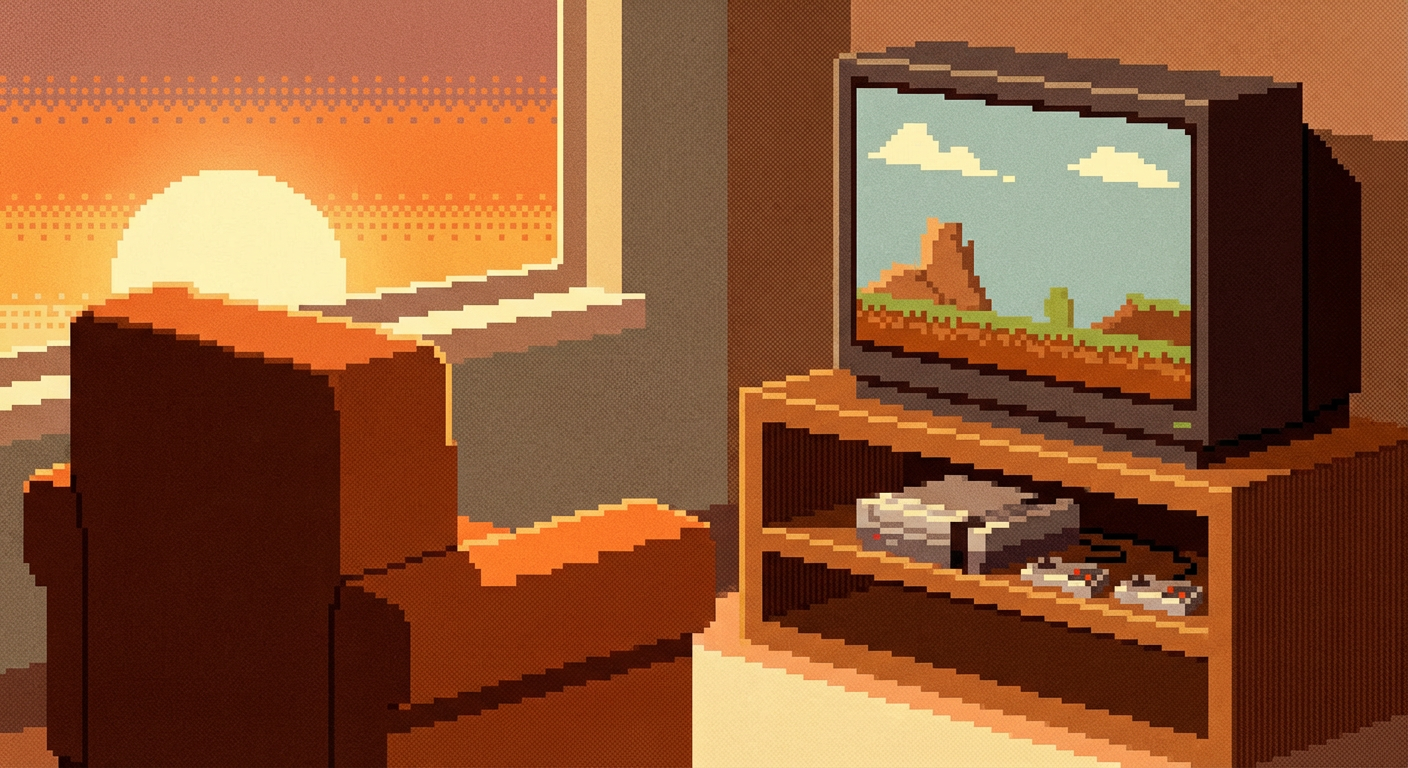
Let me tell you something that might sound wild: some of the most emotionally powerful music ever composed was created within the brutal limitations of early gaming hardware. Take Nobuo Uematsu’s work on the original Final Fantasy for the NES. He had exactly three sound channels to work with, yet somehow crafted melodies that still give players goosebumps decades later. The opening theme uses simple arpeggiated patterns that would make a classical composer weep with envy.

These hardware constraints forced composers to become surgical with their melodic choices. Every note mattered because there was literally no room for filler. Compare this to modern orchestral game scores that sometimes drown in their own complexity. The Mega Man 2 soundtrack by Takashi Tateishi remains a masterclass in memorable motif construction precisely because it strips away everything unnecessary. Dr. Wily’s Castle theme builds tension through rhythm and interval choices alone, creating an atmosphere of mechanical menace that a full orchestra might struggle to match.
What’s really interesting is how these technical limitations actually boosted the emotional impact. When you hear the simple two-note danger motif in The Legend of Zelda, your brain fills in the blanks. The sparse instrumentation forces you to become an active participant in creating the emotional atmosphere. Modern game music often spoon-feeds mood, but those early composers understood that less can genuinely be more.
Interactive Music Systems: When Soundtracks Become Smart
Here’s where game music gets genuinely revolutionary compared to film or television scores. The best game composers don’t just write music that plays while you game. They create systems that respond to your actions, your choices, your failures and victories in real time. Take Jesper Kyd’s work on the Assassin’s Creed series. The way the music smoothly shifts from exploration to stealth to combat isn’t just clever programming. It requires compositional techniques that would make film composers rethink everything they know about scoring.
The Halo series demonstrates this perfectly through its adaptive audio design. Martin O’Donnell and Michael Salvatori didn’t just compose a soundtrack. They built a musical AI that reads your playstyle and responds accordingly. When you’re sneaking through a Covenant ship, the music pulls back to atmospheric pads and subtle percussion. The moment you’re spotted, the system doesn’t just slam into action music. It bridges between states using musical transitions that make narrative sense, maintaining emotional continuity while meeting gameplay needs.
What most players don’t realize is how much work goes into making this feel natural. Composers must write modular pieces that can be rearranged on the fly without creating jarring transitions. They’re basically composing multiple songs at once and trusting algorithms to blend them smoothly. When it works well, like in Ori and the Blind Forest, you never notice the seams. When it works poorly, you get obvious musical whiplash that breaks immersion entirely.
The Emotional Architecture of Level Design Through Sound
Game music doesn’t just accompany gameplay. It teaches you how to play. The best composers understand that their music works as invisible level design, guiding players through emotional peaks and valleys that enhance mechanical understanding. Koji Kondo’s work on Super Mario Bros. remains the gold standard here. That overworld theme isn’t just catchy. Its bouncing rhythm literally teaches you the game’s jumping mechanics through musical phrasing.
Consider how Bloodborne’s soundtrack by Tsukasa Saitoh approaches this concept. The music doesn’t just create atmosphere. It educates players about threat levels and encounter design through orchestral dynamics. Boss themes build in intensity at specific intervals, training you to recognize attack pattern phases without explicitly telling you what’s coming. The music becomes a gameplay tutorial disguised as emotional manipulation.
This is why generic orchestral scores often fail in gaming contexts, even when they’re technically solid. They’re written for passive consumption rather than interactive collaboration. A great game composer understands that their music will be heard in fragments, repeated endlessly, and interrupted constantly. They compose for these conditions rather than fighting against them. The result is music that becomes stronger through repetition instead of more annoying.
Hidden Gems: Soundtracks That Deserved Better Recognition
Let’s talk about some criminally underappreciated work that shows just how sophisticated game music composition has become. Darren Korb’s soundtrack for Transistor creates a cohesive audio-visual world through its integration of diegetic and non-diegetic elements. The main character’s voice becomes both a narrative device and a musical instrument, blurring the lines between sound design and composition in ways that would make experimental musicians jealous.
Then there’s FTL: Faster Than Light by Ben Prunty, which proves that ambient electronic music can carry emotional weight traditionally reserved for orchestral arrangements. The way those subtle synthesizer layers build tension during combat encounters shows masterful restraint. Most composers would have reached for dramatic crescendos and thundering percussion. Prunty understands that in the vacuum of space, silence and subtle electronic textures create far more effective claustrophobia.
Austin Wintory’s work on Journey deserves special mention for its innovative approach to multiplayer musical interaction. When two players meet in that game, their musical themes literally harmonize in real time. It’s a technical achievement that works for the story, using musical collaboration to encourage human cooperation without a single word of dialogue. This is game music working at its highest level: technology and artistry combined to create experiences impossible in any other medium.
Why This All Matters Beyond Gaming
Game music composition is pushing musical boundaries in ways that concert halls and film studios often can’t or won’t attempt. These composers are working with interactive systems, adaptive algorithms, and audience participation models that make traditional composition look quaint by comparison. They’re not just writing music. They’re building emotional experiences that respond to individual player behavior in real time.
The techniques being developed in game audio are already influencing other media. Film composers are beginning to experiment with modular scoring techniques learned from game development. Interactive music installations in museums and art galleries borrow heavily from game audio programming. Even pop music production increasingly uses the layering and loop-based composition methods that game music pioneers developed out of necessity.
More importantly, game music is creating a generation of listeners who expect their audio experiences to be participatory rather than passive. These aren’t just soundtracks. They’re collaborative compositions between artist and audience, mediated through code and expressed through play. That’s not just where game music is headed. It might be where all music is going.
What game soundtracks have stuck with you over the years? I’m always hunting for those hidden gems that show innovative approaches to interactive audio design, so drop your recommendations in the comments. Whether it’s a AAA blockbuster or some obscure indie game that nobody played, I want to hear about the music that made you stop and really listen.